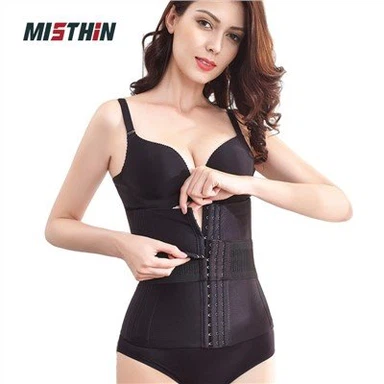

Waist Trainer vs Corset | 7 Key Differences
Aug 25, 2025

Waist Trainer vs Corset: What's the Difference?
If you've ever shopped for a shaping garment, you've probably seen the terms "waist trainer" and "corset" used interchangeably. But are they the same? The short answer: no.
While both cinch the waist and enhance your silhouette, they differ significantly in design purpose, materials, wearability, and long-term use.At MISTHIN, with over 10 years of experience manufacturing both waist trainers and corsets in our own factory, we know the subtle - and not-so-subtle - differences between these two garments.
In this guide, we'll break down exactly how they compare across 7 key dimensions:
- Definition
- Materials
- Style Options
- Pros & Cons
- Ease of Use
- Workouts or Everyday Wear
- How to Wear
Now,let's dive in.

Definition: Purpose & Origin
| Feature | Waist Trainer | Corset |
| Primary Purpose | Gradual waist shaping, posture support, everyday wear | Dramatic waist reduction, fashion statement, special occasions |
| Origin | Modern fitness & shapewear trend (2000s–present) | Historical undergarment (16th–19th century), now revived as fashion |
| Design Goal | Comfort + consistency for daily use | Aesthetic impact + extreme cinching |
Key Insight:
A waist trainer is like a "daily gym partner" - built for repetition and routine.
A corset is like a "red carpet dress" - designed for impact, not all-day comfort.
Materials: What They're Made Of
Waist Trainer:
Latex or neoprene core for compression
Steel bones (flexible) for structure
Hook-and-eye closure (3–5 rows)
Breathable outer fabric (cotton, nylon-spandex blend)
Corset:
Dense fabric (coutil, satin, brocade)
Rigid steel or spiral steel bones
Busk front closure + lace-up back
No stretch fabric
Style Options: Design & Aesthetics

Waist Trainer:
✅ Sleek, low-profile designs
✅ Usually solid colors,Skin-toned, black, or neutral colors,
✅ Invisible under clothing
✅ Minimal hardware
If you're looking for a low-key work or workout look, opt for a Waist Trainer
Corset:
✅ Ornate lace, ribbons, and embroidery
✅ Bold colors and patterns, Usually with decoration
✅ Visible as outerwear (e.g., over shirts)
✅ Decorative grommets and bows
If you're looking for a bold fashion statement or photoshoot, opt for a Corset.

Pros & Cons: Side-by-Side Comparison
| Aspect | Waist Trainer | Corset |
| Pros |
- Lightweight and breathable - Easy to put on (hook-and-eye) - Designed for daily wear - Supports posture and core awareness - More affordable |
- Delivers dramatic waist reduction (up to 4–6 inches) - High-fashion appeal - Durable, long-lasting construction - More customization options, especially prints and embellishments |
| Cons |
- Limited cinching power - Less structural support - Results are subtle and temporary |
- Difficult to self-lace - Not suitable for all-day wear - Can restrict movement and breathing - Expensive and high maintenance |
Ease of Use: How Easy Are They to Wear?
Waist Trainer:
Time to Put On: 10–20 seconds
Closure: Hook-and-eye (like a bra),or hook and zipper
Self-Wear: Yes, easy to fasten alone
Adjustability: Limited (3–5 hook rows)
Corset:
Time to Put On: 3–10 minutes
Closure: Front busk + back lacing
Self-Wear: Possible, but hard to tighten fully alone
Adjustability: High (infinite lace-up fit)
92% of users said waist trainers are "easy to wear daily," while only 38% said the same for corsets.
Workouts or Everyday Wear: Which Is Better?
| Options | Waist Trainer | Corset |
| Workouts | light cardio, walking, strength training | Not recommended (restricts breathing) |
| Everyday Wear | 6–8 hours comfortably | Max 2–4 hours (risk of discomfort) |
| Under Clothes: | Seamless fit ,under T-shirts, dresses | Often worn as a fashion piece |
| Postpartum Use | ommonly used for support | Too rigid for recovery |
If you want to wear a shaping garment during workouts, a waist trainer is the only safe option - provided it allows full diaphragmatic breathing.
How to Wear: Best Practices
How to Wear a Waist Trainer:
Start slow: 1–2 hours/day, increase gradually.
Wear over a liner: Prevents chafing and absorbs sweat.
Hook from bottom to top: Ensures even compression.
Breathe deeply: You should never feel restricted.
Remove after 8 hours max: Allow skin and muscles to recover
MISTHIN Tip: Our waist trainers are designed with 3-row hook closure for adjustable tightness - use looser settings as you build endurance.
How to Wear a Corset:
Loosen laces completely before putting on.
Fasten the front busk first.
Tighten laces gradually - don't force it.
Use a corset spoon to smooth fabric and prevent pinching.
"Season" your corset: Wear 1–2 hours at a time for the first week to break it in.
Never sleep in a corset or tighten it to the point of pain.
Quick Comparison Table: Waist Trainer vs Corset
| Feature | Waist Trainer | Corset |
| Best For | Daily wear, workouts, posture | Fashion, events, dramatic shaping |
| Wear Time | Up to 8 hours/day | 2–4 hours max |
| Ease of Use | Very easy (hook-and-eye) | Moderate (lacing required) |
| Cinching Power | 1–2 inches (temporary) | 3–6 inches (with training) |
| Breathability | High | Low to moderate |
| Maintenance | Machine washable (with care) | Hand wash only, store flat |
At MISTHIN: We Make Both - With Integrity
As a manufacturer with over a decade of experience, we design waist trainers and corsets with one goal: to serve the wearer, not just the aesthetic.
Our waist trainers are built for real life - tested for breathability, flexibility, and durability. Our corsets are crafted for impact - with reinforced stitching, premium boning, and elegant finishes.
Whether you're shaping your waist for health, confidence, or style, we believe in safe, informed choices